Immediate Hazard Neutralisation
Safely remove dangerous hanging timber and unstable trees threatening family and property.
We make safe and remove fallen and dangerous trees across Little River following severe weather and sudden failures.
Prioritising dangerous trees and property damage across all Little River locations
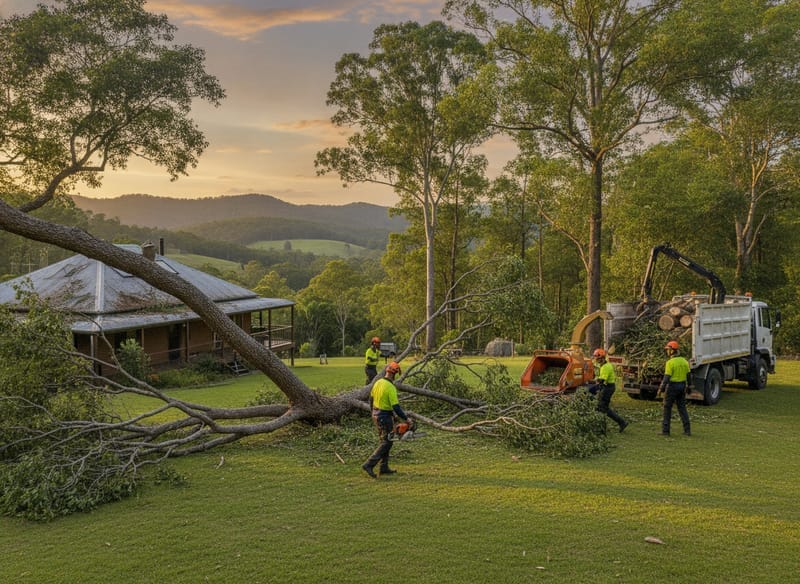
When strong gales, thunderstorms, or sudden root failures cause a tree to collapse, our emergency tree removal Little River team steps in to make your property safe. We stabilise shifted root plates, dismantle hung-up branches, and remove timber that has fallen onto structures, access roads, or power drops.
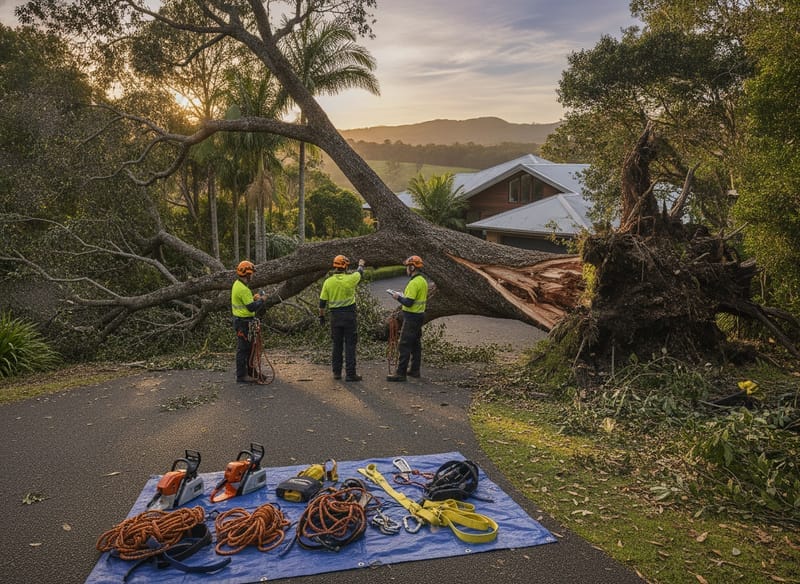
Severe north winds preceding cold fronts frequently strike the Little River plains, causing mature trees on cracked basalt clay to uproot or snap suddenly. Our crews are trained to manage high-risk, wind-thrown timber.
Safely remove dangerous hanging timber and unstable trees threatening family and property.
Quickly reopen blocked driveways, paddocks, and vehicle tracks so normal operations can resume.
Expert crane and rigging methods lift fallen trunks off roofs without causing further structural damage.
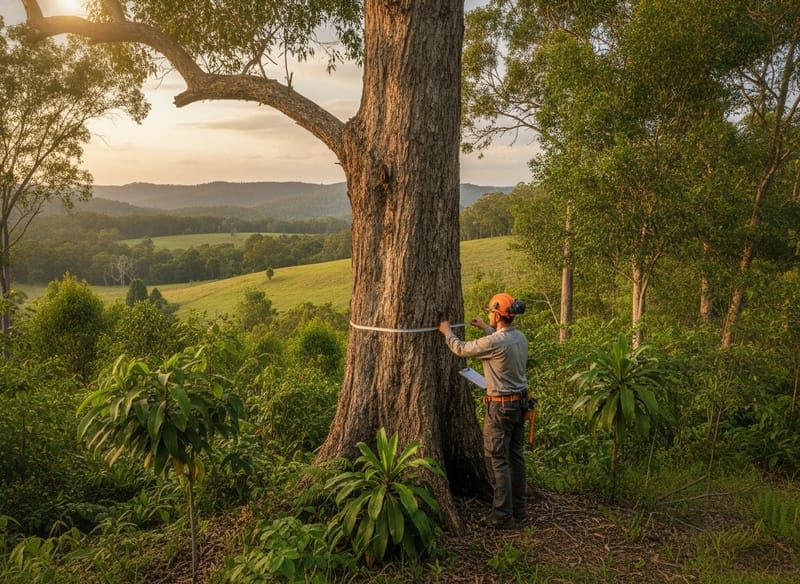
We evaluate site hazards, electrical risks, structural tension, and establish an exclusion zone.
We secure the tree with ropes, winches, or props to prevent further movement during cutting.
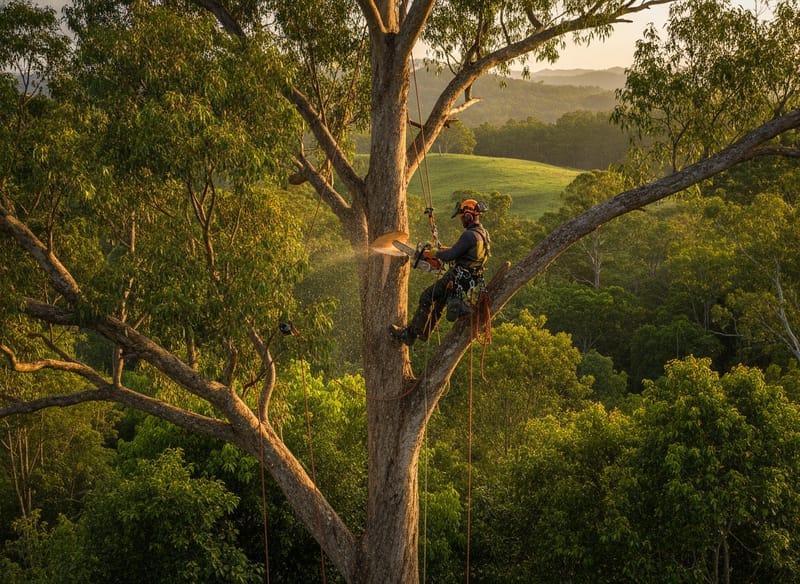
Our qualified arborists methodically relieve timber tension and dismantle the tree section by section.
Fallen brush is processed and timber is cleared to restore full, safe access to your property.
When summer thunderstorm gust fronts hit the open grasslands toward the You Yangs, or saturated clay soils give way during heavy winter rains, you need fast, professional assistance. At Werribee Arborist, we provide the Emergency Tree Removal Little River residents and acreage owners rely on. Whether a mature River Red Gum has dropped a massive limb on your roof or high westerlies have uprooted a large Bhutan cypress across your driveway, our team is equipped to respond. Living in the driest part of southern Victoria means our local trees are subjected to extreme seasonal stress. Hot north winds and sudden drought shrinkage in the heavy basalt clay can severely loosen root plates. When failure happens, the consequences for your home, sheds, and livestock fencing can be devastating. We are your local, fully qualified arborists, dispatching our own climbers, tippers, and loaders to make your site safe.
Dealing with storm-damaged timber is highly unpredictable. When a large tree fails, the trunk and remaining canopy are subjected to immense, hidden tension and compression forces. A DIY approach with a hardware-store chainsaw is one of the most dangerous things a homeowner can attempt. One wrong cut can cause a partially uprooted tree to roll or a hung-up limb to snap back, resulting in catastrophic property damage or severe injury. Under-qualified operators present an equal risk. In the aftermath of a severe storm across the Werribee plains, unqualified individuals often door-knock acreage properties, offering cheap tree cleanups. They rarely hold the necessary Working at Heights tickets or public liability insurance, leaving you completely exposed if a suspended limb crashes through your roof or injures someone on-site. Our team provides a professional, AS4373-compliant response to tree emergencies. We understand the specific failure patterns of local species like Drooping Sheoaks and older conifers. Before we start our chainsaws, we assess the structural load, establish a safe drop zone, and secure the unstable canopy using professional rigging. We solve the immediate hazard safely, protect your remaining assets, and provide the itemised, arborist-certified documentation your insurance company will demand.
When responding to a tree emergency on rural blocks or tight residential lots, we deploy specialised equipment and proven arboricultural techniques to safely dismantle the hazard.
For massive River Red Gums or mature conifers that have collapsed onto homes or sheds, we utilise crane-assisted lifting. This allows us to secure and lift heavy, unstable sections of the tree away from the structure safely, without applying any additional weight or impact to your already damaged roof.
When elevated work platforms cannot safely access sodden or heavily vegetated acreage blocks, our AQF Level 3 climbing arborists use double-rope techniques and friction devices to safely isolate and lower hung-up branches and broken canopy sections piecemeal.
Fallen trees leave exposed, highly dangerous root plates that can forcefully snap back into the hole once the trunk's weight is severed. Our team carefully reads the tension and compression wood, performing precise release cuts with heavy-duty chainsaws before safely resting the root ball.
We deploy high-capacity 12-inch wood chippers, mini-loaders, and tipper trucks to rapidly clear blocked access routes. Large trunks are systematically sectioned and can either be stacked on your block for future firewood use or completely removed from your Little River property.
When disaster strikes your property, our Emergency Tree Removal Little River emergency team follows a strict protocol designed to eliminate the danger rapidly while providing the exact documentation you need for an insurance claim. Step 1: Dispatch and Site Assessment We prioritise immediate hazards—trees on houses, crushed fences, or blocked driveways. Upon arrival at your Little River address, our first job is to secure the site, isolate any danger zones from your family and pets, and assess the structural integrity of the failed tree. Step 2: Photographic Documentation Before any cutting begins, we take comprehensive photos of the tree, the point of failure, and the surrounding property damage. We provide this evidence, along with a written arborist assessment, to support and streamline your insurance claim. Step 3: The Make-Safe Operation Using EWPs, cranes, or rope access, our team carefully removes the weight from your structures. We cut away suspended branches and stabilise the root plate, effectively eliminating the immediate threat to life and property. Step 4: Full Extraction and Cleanup Once the site is stable, we process the remaining timber. We use our heavy-duty wood chippers and skid steers to remove the heavy debris, leaving your driveway clear and your property safe so that structural repairs can begin.
Tree emergencies require action, but safety and compliance can never be bypassed. Every emergency tree removal we undertake aligns closely with site safety protocols and the principles of AS4373 (Pruning of Amenity Trees), ensuring any retained, storm-damaged trees are pruned for future stability rather than recklessly lopped. Our business is fully public liability insured and covered by WorkCover, protecting your Little River property from start to finish. Our on-site team is led by AQF Level 3 qualified climbing arborists, backed by traffic management and elevating work platform (EWP) certifications. If a dangerous tree threatens a site, we also understand AS4970 (Protection of Trees on Development Sites) requirements to ensure surrounding retained trees aren't compromised during the emergency extraction.
Navigating Wyndham City Council regulations during a crisis can be stressful. Under the Wyndham Planning Scheme, removing native vegetation usually requires a planning permit under Clause 52.17. Furthermore, properties situated along waterway corridors like the Little River itself are governed by Environmental Significance Overlay Schedule 1 (ESO1). However, the council provides specific, immediate exemptions for emergency works and personal safety. If a tree is dead, dying, or presents an immediate risk of failure, it can typically be removed without prior planning approval. To keep you fully compliant, we provide the required written arborist justification and photographic proof that the tree was an imminent hazard. For properties on the open grassland fringes mapped as Bushfire Prone Areas, we also ensure our emergency clearing aligns with Clause 52.12 exemptions, keeping your asset protection zones clear and compliant after a major storm event.
Once the immediate hazard is cleared, it is crucial to assess the remaining canopy on your property. High wind events that cause one tree to fail will often structurally compromise adjacent trees. We highly recommend booking our AQF Level 5 consulting arborist to conduct a post-storm hazard assessment on any remaining large River Red Gums or mature conifers on your block. We can also return to perform professional stump grinding, removing the uplifted root plate to below ground level so you can properly repair fences or driveways. Keep the chipped mulch to restore moisture to your heavy clay soils, helping your surviving trees withstand the next hot Werribee summer.
Emergency tree work is priced according to the immediate risks, complexity of the rigging, and machinery required to secure the site.
We provide clear, honest pricing before commencing emergency operations, with itemised documentation available for insurance purposes.
We provide emergency tree removal services across Little River and the greater Wyndham municipality.
Contact our qualified arborists for safe emergency tree dismantling and hazard clearance.
Call 0468 099 515