Elimination of Hidden Hazards
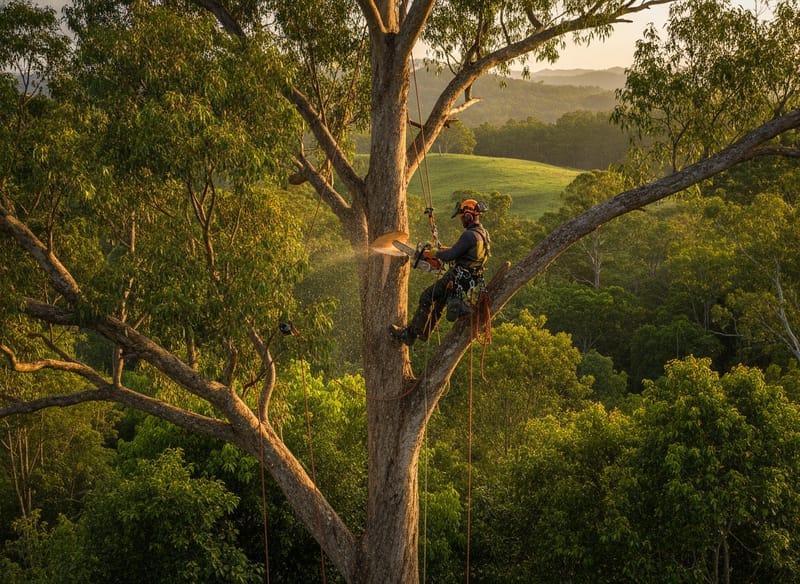
Remove dangerous hung-up limbs that threaten people and livestock below.
Post-storm tree cleanup, hung-up branch removal, and canopy recovery across Little River.
Assisting property owners across Little River following severe weather and wind events
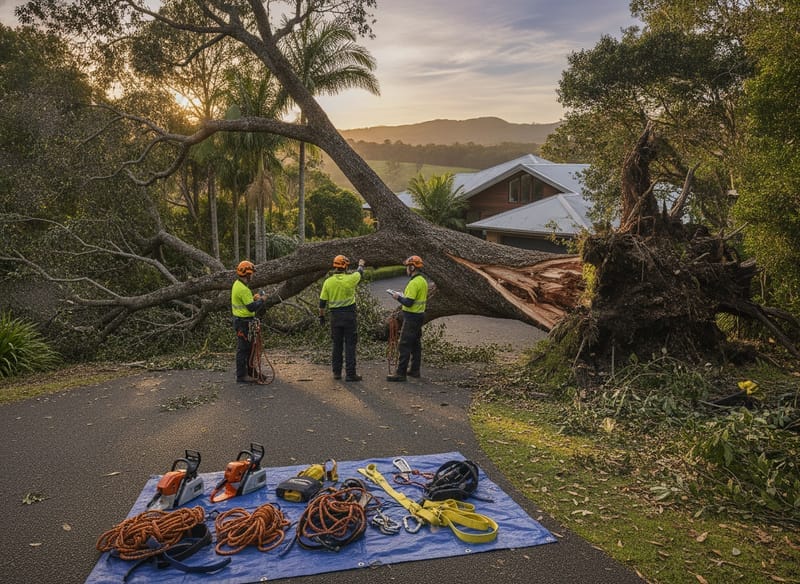
When severe thunderstorm gust fronts or winter westerlies sweep across the Werribee plains, trees frequently suffer torn limbs, snapped trunks, and uprooted root plates. Our storm damage tree removal Little River service manages the entire post-storm recovery process, clearing green waste and making your property safe.
Little River's open volcanic plains offer minimal wind shielding. Thunderstorm downbursts and sudden cool changes frequently twist and tear mature eucalypt and pine canopies, leaving unstable fractured wood high overhead.
Remove dangerous hung-up limbs that threaten people and livestock below.
Expert remedial pruning can clean torn branch collars and help structurally sound trees recover.
Quickly restore clean access to paddocks, farm tracks, and residential garden areas.
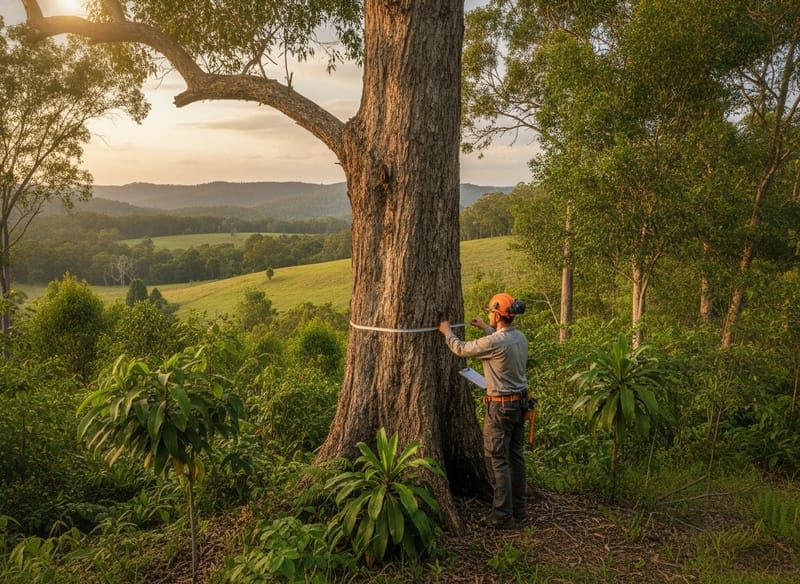
We assess the full extent of storm damage across the property and categorise urgent safety hazards.
Our team tackles suspended branches, dangerous hang-ups, and structurally compromised trunks first.
We cleanly prune jagged tear-outs on surviving trees to allow proper bark and wood healing.
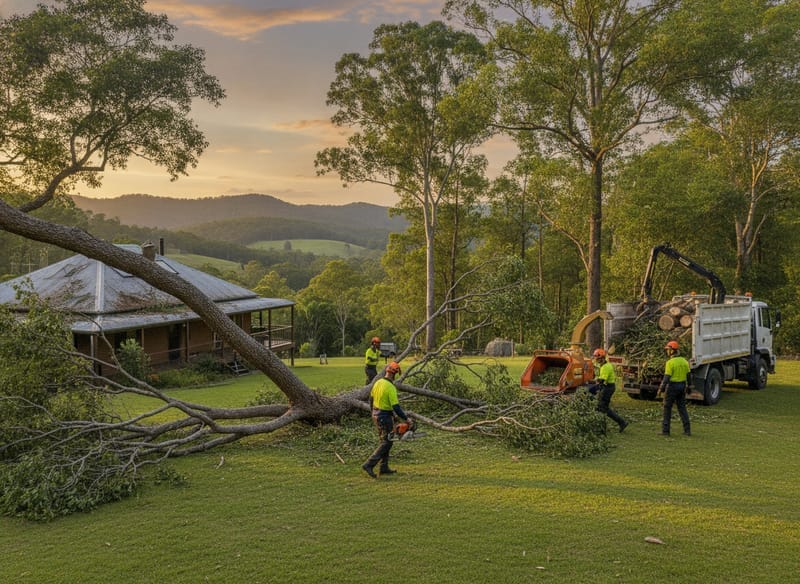
All fallen timber and branches are fed through our heavy wood chippers and cleared from the site.
When extreme weather strikes, our dedicated team provides swift and safe Storm Damage Tree Removal Little River acreage owners and residents can rely on. Situated on the flat basalt plains in the rain shadow of the Otways, Little River experiences a unique and challenging climate. Our region is notorious for hot north winds ahead of summer cool changes, fierce thunderstorm gust fronts, and winter westerlies sweeping off Port Phillip Bay. These extreme weather events wreak havoc on established trees. Sodic, reactive clay subsoils shrink during droughts, loosening the root plates of massive River Red Gums and planted heritage conifers. When the rains and winds finally hit, whole-tree failures and sudden summer limb drops become severe hazards for homes, sheds, and fences. As your local Werribee Arborist team, we mobilise quickly to secure your property. We bring the heavy equipment and technical expertise necessary to handle dangerous, unpredictable fallen timber, ensuring your family and assets are protected when nature takes a toll.
Tackling a downed or shattered tree with a ladder and a hardware-store chainsaw is a recipe for disaster. Storm-damaged timber is highly unpredictable. Fallen and hung-up branches hold immense stored energy, known as compression and tension wood. A single incorrect cut can cause heavy limbs to snap back or roll violently, posing a lethal risk to unqualified property owners.
Furthermore, attempting to tidy up damaged but standing trees through harsh lopping or topping only sets you up for future failures. Under the Australian Standard AS4373 (Pruning of Amenity Trees), lopping is strictly discouraged because it promotes weak epicormic regrowth that easily tears off in the next high-wind event.
This is why a professional approach matters. Our AQF Level 3 climbing arborists understand exactly how to read wind-thrown timber. We assess the structural integrity of every affected tree, applying safe dismantling techniques and targeted pruning to salvage what can be saved, or executing complete removals where the risk is too high. Relying on our fully insured team guarantees the hazard is eliminated without risking your safety or inflicting secondary damage to your property.
We deploy specialised equipment and proven methodologies to dismantle compromised trees safely across Little River and the wider Wyndham region.
Our first step on any storm-damaged site is to walk the property and categorise the risk. We tag trees by priority: immediate hazards over houses or access tracks, secondary hazards like hung-up limbs, and standing but compromised trees needing further structural assessment.
For compromised trees in tight residential pockets or gully areas where heavy machinery cannot tread, our climbers use advanced double-rope techniques. This allows us to safely dismantle shattered River Red Gums and sheoaks piece-by-piece from the canopy down.
When uprooted trees threaten structures or powerlines, we utilize Elevating Work Platforms (cherry pickers) and mobile cranes. This ensures we can lift heavy, unstable logs cleanly away from your roofline without causing further impact damage.
We use professional top-handle saws in-tree, large ground chainsaws, and high-capacity 12-inch wood chippers to process all debris on-site. We cart away the heavy timber in our tipper trucks, leaving your acreage or suburban block safe and fully accessible.
From the moment the storm passes to the final site cleanup, our process is designed to restore safety to your property as quickly as possible. First, we conduct an emergency call-out assessment. We arrive on-site to identify immediate risks, such as a fractured limb hanging directly above your driveway or an uprooted Drooping Sheoak leaning on your boundary fence. We secure the area to prevent any immediate harm to your family or livestock. Next, we provide a transparent, line-itemised quote. Because storm damage often involves insurance claims, we break out the costs for make-safe work, complete removal, and stump grinding, complete with photographic evidence before we start up a chainsaw. Once approved, our crews execute the hazard reduction. We focus first on relieving the tension in hung-up branches and clearing accessways. Finally, we proceed with the complete dismantling and cleanup. Whether it's chipping the brush, removing massive logs with our loader cranes, or grinding out the remaining stump, we ensure the site is returned to a safe, pristine condition.
When dealing with emergency tree removals, compliance and safety are non-negotiable. Our operations strictly adhere to AS4373 for any remedial pruning, and AS4970 for the protection of retained trees on your block.
Every member of our team carries the necessary tickets, from Working at Heights and EWP licenses to advanced chainsaw cross-cut certifications. We are fully covered by comprehensive Public Liability insurance and WorkCover, shielding you from any financial risk. If your insurance company requires formal documentation for a claim, our AQF Level 5 consulting arborists provide detailed, photographic reports outlining the structural failure and the required scope of works.
Successfully navigating Storm Damage Tree Removal Little River requires specific local knowledge of the Wyndham City Council regulations and the local geology. Our flat basalt plains feature heavy, sodic clays that dramatically shrink during droughts and become waterlogged during heavy rains, leading to highly unpredictable root-plate failures in mature trees.
While Wyndham Council does not have a blanket local law protecting private trees, the Wyndham Planning Scheme does apply. For instance, properties near the Little River waterway corridor may fall under the Environmental Significance Overlay Schedule 1 (Waterway Corridors), which requires a permit to remove any vegetation, even dead or storm-damaged trees. Additionally, native vegetation removal on lots over 0.4 hectares is governed by Clause 52.17. We handle this compliance for you. Our AQF Level 5 arborists provide the necessary reports to justify emergency works to the council, ensuring your cleanup is entirely legal.
After our trucks leave, it is crucial to keep an eye on the remaining trees across your property. High wind events can cause hidden structural damage that isn't obvious. Monitor the soil around the base of your larger trees; deep cracks or soil heaving can indicate a compromised root system that may fail in the next gust. Additionally, watch for rapid, spindly epicormic growth on branches that were whipped by the wind. We highly recommend booking our team for a follow-up inspection a few months after a major storm. We can perform selective deadwooding and formative pruning under AS4373 to ensure your canopy is resilient and prepared for the next Werribee summer storm season.
Storm cleanup costs depend on the volume of fallen timber, the presence of hung-up limbs, and site accessibility.
We provide honest, upfront quotes with transparent pricing and full documentation for insurance claims.
We provide storm cleanup and tree recovery services throughout Little River and nearby western suburbs.
Contact our experienced arborists for comprehensive storm damage tree cleanup and canopy restoration.
Get a Free Quote