Immediate Hazard Mitigation
Neutralise life-safety risks and prevent secondary structural damage to your home.
We make safe and remove fallen, split, and structurally compromised trees threatening homes across Point Cook.
Emergency tree response across Point Cook, Sanctuary Lakes, and surrounding Wyndham estates
When severe weather strikes or soil conditions fail, emergency tree removal Point Cook residents need experienced arborists who can handle dangerous, high-tension timber safely. We secure the site, lift fallen trunks off roofs and driveways, and remove immediate structural threats.
Point Cook's combination of heavy clay and sudden summer northerly gales frequently causes sudden limb drop in mature gums and windthrow in shallow-rooted estate trees. Saturated clay in winter or shrink-cracked clay in summer severely compromises root anchoring during high-wind events.
Neutralise life-safety risks and prevent secondary structural damage to your home.
Clear blocked driveways, footpaths, and garage entrances blocked by heavy trunks.
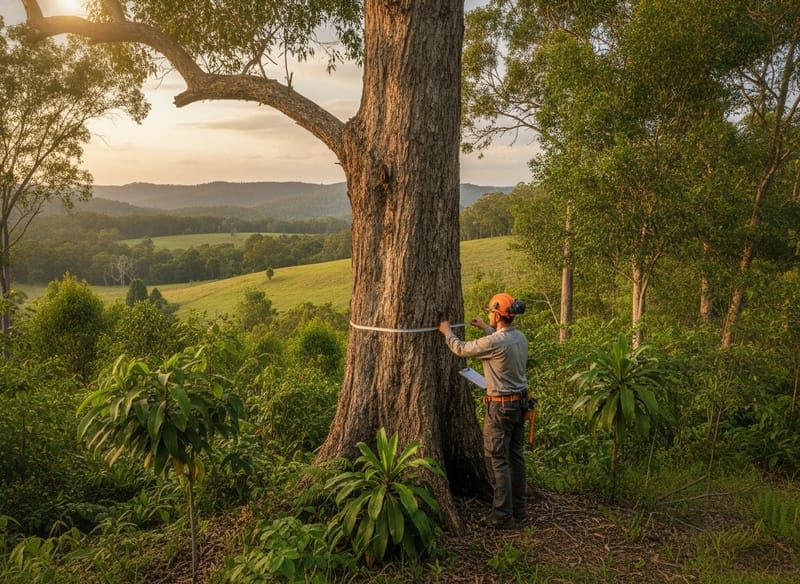
Receive detailed arborist notes confirming emergency safety justification under local council rules.
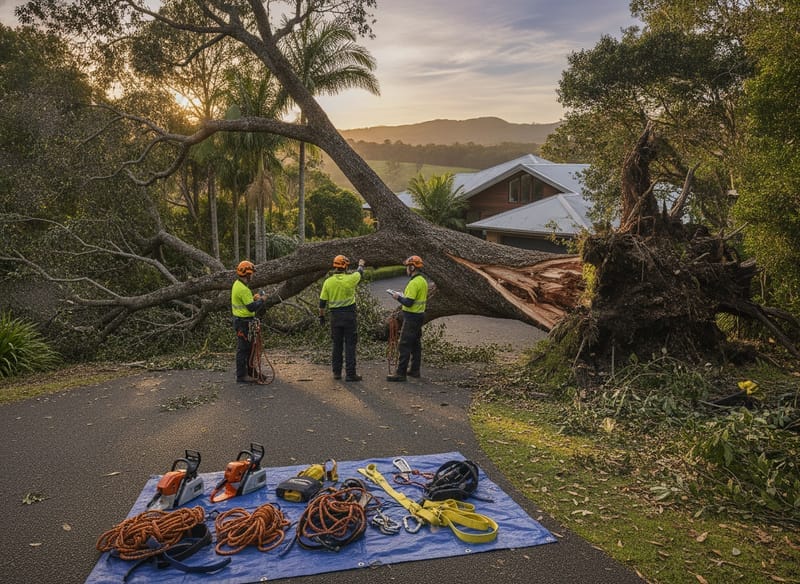
We establish exclusion perimeters, assess structural loads, and check for downed electrical wires.
Tension and compression forces in the wood are calculated before cutting to avoid violent branch snap.
Timber is systematically sectioned and lifted away from roofs, fences, or vehicles using rigging lines.
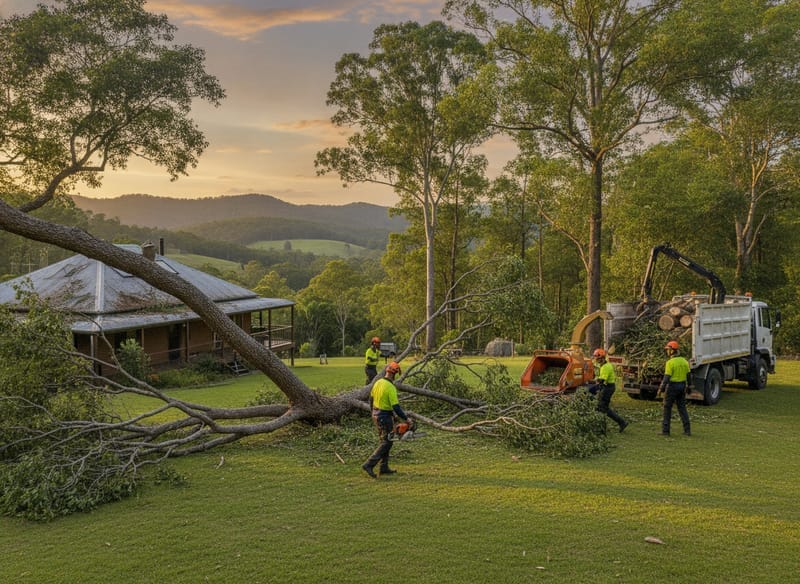
All hazardous foliage and heavy logs are chipped or removed to leave the property safe and accessible.
When severe thunderstorms or hot northerlies lash the western suburbs, the resulting damage can be immediate and devastating. If you are facing a fallen limb, a partially uprooted trunk, or an imminent hazard, our Emergency Tree Removal Point Cook emergency team is ready to secure your property. Point Cook's unique mix of modern growth corridor estates, coastal saltmarsh winds blowing off Port Phillip Bay, and heavy, reactive basalt clay means our local trees are highly vulnerable to sudden root plate failure. Saturated soils followed by gale-force winds can bring down heavy canopies on homes, fences, and vehicles in an instant. Whether you are dealing with a shattered ornamental pear in a tight residential side-access or a massive River Red Gum limb threatening your acreage, our qualified climbers and heavy-duty trucks are equipped to make the site safe. We understand that time is critical, which is why our local crews operate with urgency to protect your family and property.
When a tree fails during a storm, the temptation for property owners is often to grab a chainsaw and start clearing the debris themselves, or to hire the first unqualified operator who knocks on the door. In an emergency scenario, this is incredibly dangerous. Storm-damaged trees are under massive, unpredictable tension. A wrong cut can cause a hung-up limb to snap back, or a heavy trunk to roll unexpectedly, leading to catastrophic injury or further property destruction. Unqualified operators often lack the complex rigging knowledge required for high-risk removals, and they rarely carry the appropriate WorkCover and Public Liability insurance. If they damage your roof or a neighbour's fence, you could be left footing the bill. Furthermore, hack-jobs or "lopping" a damaged but salvageable tree violates AS4373 pruning standards, leaving the tree prone to rapid decay and weak epicormic regrowth that will simply fail again next storm season. Our AQF-qualified arborists take a systematic, safety-first approach. We assess the structural integrity of the failed tree, identify the compression and tension points of shattered limbs, and use advanced rope-access techniques and elevating work platforms (EWPs) to safely dismantle the hazard. We resolve the immediate danger while ensuring the site is managed professionally, securely, and in full compliance with Australian Standards.
Responding to sudden tree failures requires specialised equipment and precise technical methods tailored to the specific hazard.
Our initial priority is neutralising the immediate threat. We use top-handle climbing chainsaws (like the MS201T) and targeted rigging to secure and lower hung-up branches, preventing them from crashing through roofs or powerlines. Full site clearing can then follow once the area is stabilised.
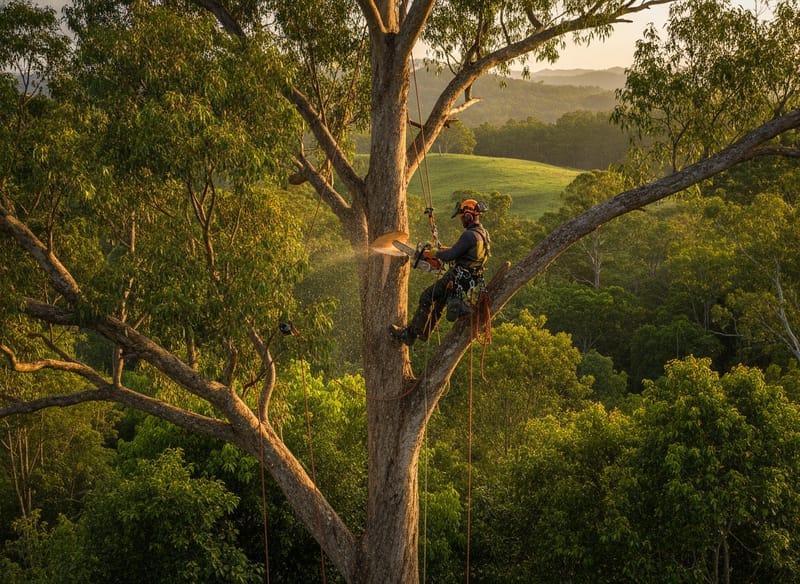
For trees that have shattered or are leaning dangerously over structures, we employ advanced rope-access techniques. By setting up friction devices and pulley systems, our AQF Level 3 climbers can piece down heavy timber with pinpoint accuracy, protecting the assets below.
In modern Point Cook estates with narrow side access, a whole fallen tree cannot be dragged out manually. We utilise mobile cranes and loader trucks to lift large trunk sections safely over rooftops, minimising disruption to your property and bypassing restrictive access constraints.
Sodic clay subsoils in the Werribee region often lead to whole-tree uprooting during heavy rain. We safely sever the tensioned root mass from the trunk using heavy-duty ground saws, allowing the root plate to fall back safely into its cavity before processing the remaining timber.
When disaster strikes, you need a reliable and structured response. Here is exactly how we handle an emergency call out from start to finish. - Step 1: Assessment and Dispatch As soon as you contact us, we evaluate the severity of the hazard. If a tree has impacted a structure or is imminently threatening life or property, we dispatch our emergency crew, aiming for a rapid rapid arrival across Point Cook and surrounding Werribee suburbs. - Step 2: On-Site Make-Safe Upon arrival, our lead arborist conducts a rapid hazard assessment. We establish a safety exclusion zone and address the most critical danger—securing split trunks, removing hung-up limbs, or tarping exposed areas if a branch has pierced a roofline. - Step 3: Council and Insurance Documentation Before fully dismantling the tree, we photograph the damage. Under the Wyndham City Council planning scheme, imminently dangerous trees can often be removed under emergency exemptions, but written arborist justification and photographic evidence must be kept on file. We coordinate this documentation for you to assist with your insurance claim. - Step 4: Full Dismantling and Debris Processing Using our EWPs, chippers, and tipper trucks, we systematically dismantle the remaining hazard. All foliage and branches are processed into mulch on-site, and heavy timber is securely loaded and hauled away, leaving your property safe, clean, and fully accessible.
Emergency tree work is inherently high-risk, which is why our team strictly adheres to all relevant safety and industry frameworks. We operate under AS4373 (Pruning of Amenity Trees) and AS4970 (Protection of Trees on Development Sites) to ensure that any retained trees are not unnecessarily compromised during the emergency clearing process.
Every member of our team holds the necessary tickets, including Working at Heights, EWP licences, and chainsaw cross-cut units. Importantly, our business is fully insured with comprehensive Public Liability and WorkCover. We document the hazard with detailed photographs prior to removal, ensuring you have the solid evidence required to support your homeowner's insurance claims seamlessly.
Operating in the western suburbs requires deep knowledge of local environmental conditions and the Wyndham Planning Scheme. Point Cook sits on a flat basalt plain with heavy, reactive clay. When extreme summer dry spells cause this clay to shrink, it loosens root plates. Subsequent heavy rain and hot northerlies often lead to sudden whole-tree failures, particularly in mature remnant canopy near the Cheetham Wetlands and coastal saltmarsh. While routine tree removal on private property under 0.4 hectares generally does not require a permit, properties in newer estates may be bound by Section 173 agreements, and those bordering Skeleton Creek may fall under an Environmental Significance Overlay (ESO). Fortunately, for a genuine Emergency Tree Removal Point Cook situation, exemptions apply for immediate personal safety and emergency works. Our AQF Level 5 consulting arborists provide the necessary post-incident written reports to justify the removal to Wyndham City Council, ensuring you are fully compliant and protected from infringements.
Once the immediate hazard is cleared and the timber is removed, your site will need some attention to fully recover. If a large tree has been uprooted, there will be a significant cavity left by the root plate. We recommend filling this promptly with topsoil to prevent water pooling and localised flooding during the next storm. For trees that sustained storm damage but were salvaged via AS4373-compliant target pruning, monitor the canopy for the next six months. Check for any signs of dieback or weak epicormic growth. If the stump from the removed tree is in the way, our team can return for professional stump grinding. Give us a call when you are ready to plan a suitable, storm-resilient replacement species for your Wyndham property.
Emergency tree work is calculated based on site complexity, equipment requirements, and the level of hazard involved.
We provide honest, upfront assessments and clear written quotes before initiating non-critical work.
We provide emergency tree services throughout Point Cook and all neighbouring suburbs.
Contact our qualified arborists to secure and remove dangerous trees on your property.
Get a Free Quote