Clean & Safe Grounds
Quickly remove storm debris, sharp broken wood, and obstructed accessways across your property.
Comprehensive post-storm tree cleanup, branch clearance, and structural hazard removal across Point Cook.
Post-storm tree cleanup across Point Cook, Sanctuary Lakes, and the wider Werribee region
When severe weather sweeps across Port Phillip Bay, storm damage tree removal Point Cook homeowners count on our team to handle multi-tree debris, sheared canopies, and cracked limb failures. We clear fallen green waste and restore structural safety to your grounds.
Point Cook regularly faces sudden wind change fronts where hot northerlies flip to gale-force south-westerlies off the bay. This abrupt change in wind direction exerts intense rotational torque on tree crowns, shearing branches and unseating root systems anchored in heavy clay soils.
Quickly remove storm debris, sharp broken wood, and obstructed accessways across your property.
Proper remedial pruning of damaged trees prevents pathogen entry and encourages healthy re-sprouting.
Clear, professional paperwork simplifies your communication with insurance assessors.
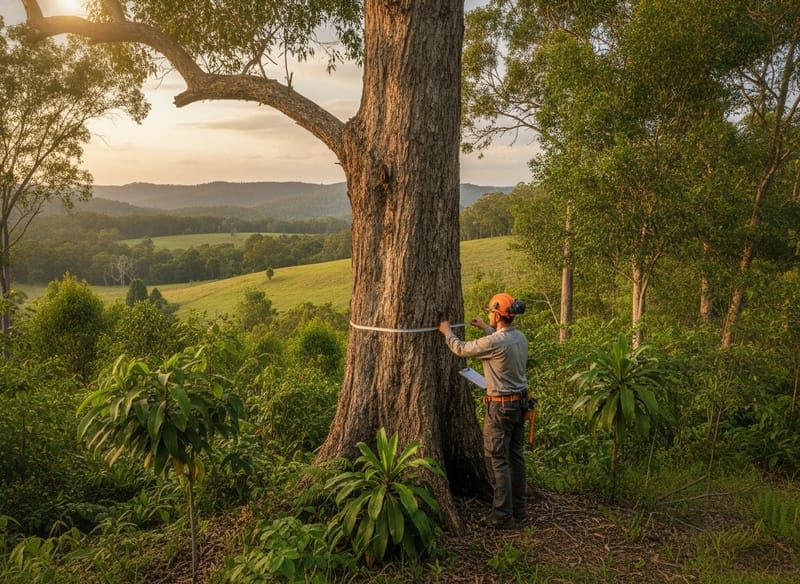
We survey the entire property to identify fallen timber, hanging hazards, and strained root plates.
We remove overhead hazards and release tensioned branches bound against structures or fences.
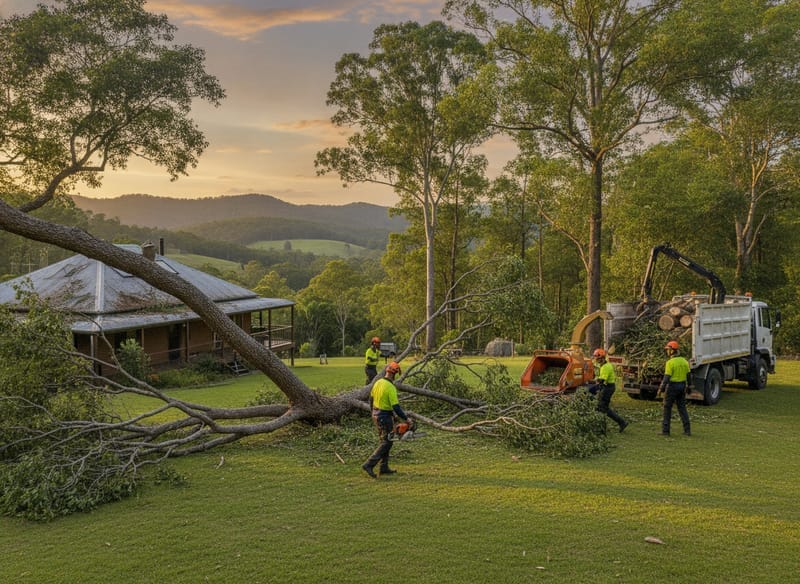
Scattered branches are gathered, chipped on site, and heavy logs are cut and loaded onto trucks.
We rake lawn areas, blow down driveways, and leave your outdoor living spaces tidy.
When summer thunderstorm gust fronts or relentless winter westerlies sweep off Port Phillip Bay, the impact on local canopies can be devastating. For the urgent Storm Damage Tree Removal Point Cook properties rely on, our team is ready to respond. The flat basalt plains and heavy, reactive sodic clay soils of the Werribee area create a unique hazard; cycles of drought shrinkage followed by sudden saturation easily loosen the root plates of mature trees, leading to sudden whole-tree failures or massive limb drops. Whether you are a homeowner in a tight new estate dealing with a split spotted gum, or an acreage owner in Werribee South managing fallen River Red Gums, our climbers and ground crews are equipped to secure your property. We understand that storm emergencies are high-stress events. Our trucks arrive fully equipped to handle compromised canopies safely, ensuring no further damage occurs to your home, fencing, or power lines.
After a severe weather event, it can be tempting to pull out a hardware-store chainsaw and start clearing debris yourself. However, storm-wrecked trees behave entirely differently than standing timber. Trunks and branches caught in a state of partial failure hold massive, unpredictable loads of tension and compression. One wrong cut can cause a heavy limb to snap back or roll, resulting in catastrophic injury or secondary damage to your property.
Furthermore, "widow-makers"—broken branches left suspended high up in the canopy—can silently drop days or weeks after the storm has passed. Without an understanding of tree physics and structural integrity, DIY cleanup is a dangerous gamble.
Our team provides a professional, AS4373-compliant approach to every storm recovery job. Our AQF Level 3 arborists are trained to safely read tensioned wood and dismantle hung-up hazards using specialized rope-access techniques and heavy machinery. We prioritize structural safety, executing precise branch collar cuts and targeted dismantling to protect what remains of the tree while completely removing the hazards.
Handling storm-damaged trees requires specialized techniques and equipment. Here is how our team safely executes emergency removals across the region.
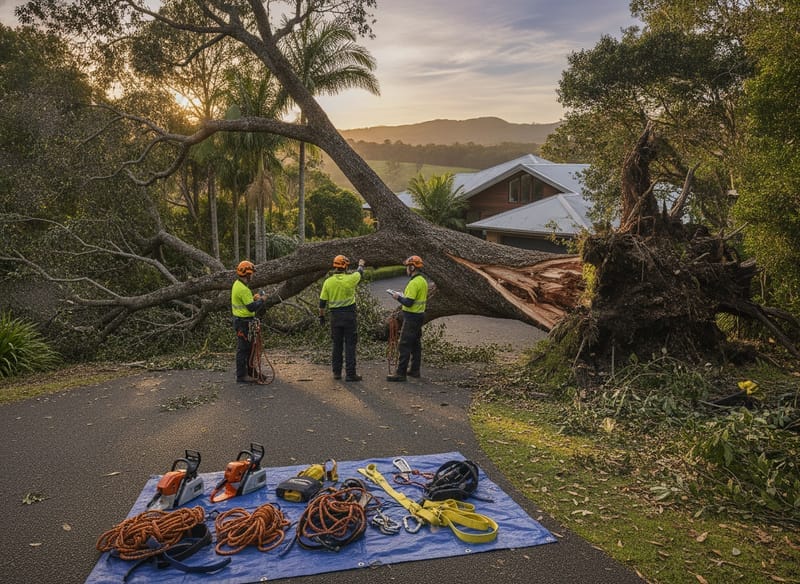
We assess the property to prioritize immediate hazards over houses or access ways. Our team isolates the danger zones and plans a systematic dismantling process that prevents secondary damage to surrounding infrastructure.
Using high-powered ground saws like the MS500i and 572XP, our arborists safely relieve tension and compression in fallen or twisted trunks. This prevents explosive snap-backs and allows for safe, controlled logging of the timber.
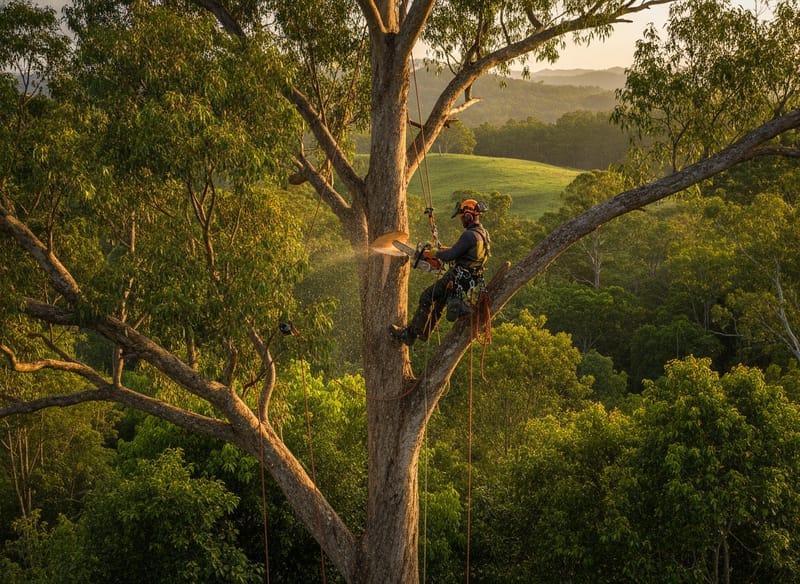
For trees that have partially failed over roofs or in narrow side-access lots common in newer estates, we use advanced double-rope climbing techniques or tracked spider lifts. This allows us to section down hung-up branches piece by piece.
When a massive mature tree, such as an established River Red Gum or London plane, has fallen onto a structure, we utilize loader cranes or HIABs to lift heavy logs vertically, avoiding further crushing weight on your property.
Our heavy-duty 12-inch wood chippers quickly process the resulting limbs and foliage into reusable mulch on-site. We utilize skid steers and mini-loaders to clear the yard, leaving your property safe and tidy.
When a storm strikes, efficiency and safety are our top priorities. From your first emergency call to the final site cleanup, our process is designed to relieve stress and restore safety to your property. First, we conduct an emergency site walk to triage the damage. We tag trees based on priority, separating immediate hazards—like limbs resting on roofs or power lines—from secondary cleanup tasks. Before any cutting begins, our team takes comprehensive photographic evidence and provides a detailed, line-by-line quote that breaks out each tree. We format these reports specifically so you can submit them directly to your insurance provider without delays. Once approved, our climbers execute 'make-safe' works, stabilizing the site by removing the most dangerous hung-up branches. After the immediate threats are neutralized, we proceed with the full removal or processing of the fallen timber. Finally, our ground crew processes all debris through our chippers, rakes the site clean, and can even stump grind the remaining rootballs to 300mm below grade, ensuring your yard is completely restored.
Safety and compliance are non-negotiable when dealing with hazardous, storm-damaged trees. Our team operates strictly under AS4373 (Pruning of Amenity Trees) to ensure any salvageable trees are pruned correctly, avoiding the detrimental practice of 'lopping'.
Every climber on our team holds an AQF Level 3 in Arboriculture, alongside current Working at Heights, EWP, and First Aid tickets. For complex jobs requiring council approval or insurance verification, our AQF Level 5 consulting arborists can provide the necessary documentation. We operate fully public liability insured and carry comprehensive WorkCover for all staff, protecting you from any risk while we work on your property.
Working in the Wyndham region means understanding its distinct climate and council regulations. Sitting in the rain shadow of the Otways, the area is the driest part of southern Victoria. However, when extreme weather does hit, the combination of high winds and heavy, reactive clay soils often results in uprooted trees across both established blocks and tight, newly developed estates.
While Wyndham City Council has no blanket local law on private trees, specific rules apply. If you have a damaged River Red Gum near Skeleton Creek, the Environmental Significance Overlay (ESO) may dictate how vegetation is managed. Furthermore, lots over 0.4 hectares may trigger Clause 52.17 Native Vegetation regulations. Our team navigates these planning schemes daily. Whether it is a shallow-rooted spotted gum leaning dangerously over a narrow property line or storm-battered boundary plantings, we provide compliant, localized solutions.
Once the immediate hazard is cleared, it is crucial to monitor the remaining trees on your property. High winds can cause hidden micro-fractures in branches that may not fail until weeks later. Keep an eye out for sudden epicormic regrowth, which can be a sign of severe stress. We recommend booking our arborists for a follow-up inspection and formative pruning before the next season's hot northerlies arrive. Proper crown thinning and deadwooding—executed to AS4373 standards—will significantly reduce the wind sail effect on your canopy, protecting your trees from future storm damage.
Storm cleanup costs are determined by the volume of fallen timber and the complexity of safe extraction.
We provide detailed, itemised written quotes tailored to your exact storm cleanup scope.
We service all storm-affected properties across Point Cook and nearby Wyndham suburbs.
Contact our qualified arborists for thorough storm cleanup and tree hazard removal.
Get a Free Quote