Controlled Tree Dimensions
Keep large trees at a manageable scale suited to compact residential boundaries.
Professional height reduction, selective canopy thinning, and safe tree management alternatives across Point Cook.
Providing expert canopy reductions across all Point Cook residential estates
Homeowners searching for tree lopping Point Cook often need to manage trees that have outgrown their residential blocks. While traditional lopping causes structural decay and weak regrowth, our qualified arborists provide professional crown reduction and selective height management under AS4373 standards.
Trees planted in Point Cook estates often grow faster than expected in irrigated garden beds before encountering dense clay subsoils. When they exceed space limitations on compact blocks, controlled canopy reduction provides the clearance you need without creating dangerous rotting stubs.
Keep large trees at a manageable scale suited to compact residential boundaries.
Lower the physical leverage of tall branches exposed to severe southerly and northerly wind gusts.
Proper reduction cuts allow the tree to seal naturally, preventing internal hollows and fungal wood rot.
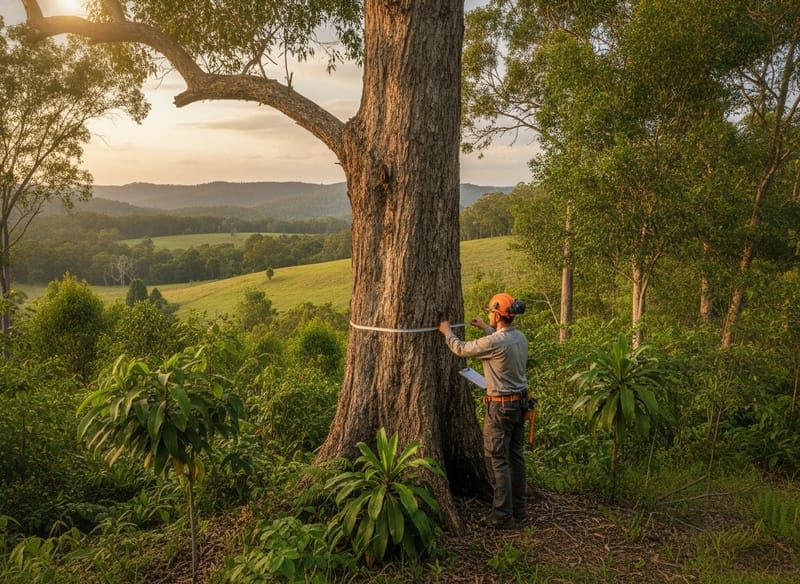
We assess the tree's height, internal branch architecture, and lateral growth options.
We identify healthy secondary leaders capable of sustaining growth after upper branches are trimmed.
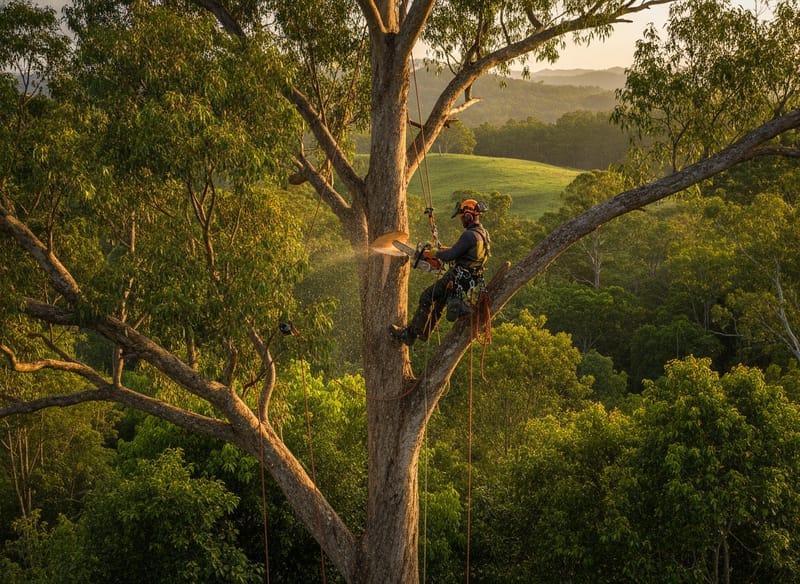
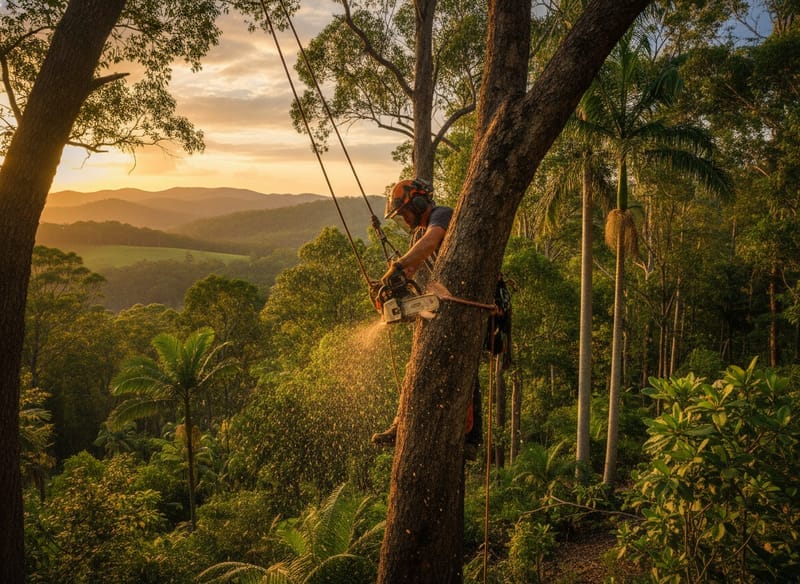
Our climbers carefully cut and lower upper branches to reduce height without damaging main stems.
All cut timber and brush is processed on site and removed, leaving your grounds immaculate.
Living on the dry, windy flat plains of Melbourne's west means our suburban canopies take an absolute beating. When branches start overhanging your roof, blocking solar panels, or aggressively crowding narrow boundary lines, you might be looking for Tree Lopping Point Cook to get things back under control. Our local arborists understand exactly how to manage overgrown and problematic canopies in this unique local climate.
Point Cook’s newer estates are famous for tight lot boundaries, meaning trees quickly outgrow their designated space. Meanwhile, out toward the older blocks of Werribee and Hoppers Crossing, massive sixty-year-old gums and aging cypresses face the full brunt of hot summer northerlies and fierce winter westerlies sweeping off Port Phillip Bay.
Whether you need us to pull back a heavy spotted gum encroaching on your fence line, or safely reduce the sail area of an ornamental pear before the storm season hits, we provide targeted, safe canopy reductions. We solve your residential space issues and mitigate storm risks without destroying the long-term health or structural integrity of your trees.
Many homeowners call us asking to "lop" a tree when what they really mean is they need it made significantly smaller. True "lopping" or "topping"—the outdated practice of indiscriminately hacking branches mid-span to leave large, blunt stubs—is highly destructive and dangerous. When a tree is aggressively topped, it panics. It loses its food-producing foliage and responds by pushing out weak, rapid epicormic regrowth just to survive. Because these wild new shoots are poorly attached to the decaying edges of the stubs, they become massive failure risks. When the sudden summer gust fronts sweep across the Werribee Plains, these weakly attached branches are always the first to snap, causing expensive property damage. As qualified arborists, we solve your overgrowth and clearance problems using methods that actually work long-term. Instead of hacking the tree back blindly, we perform targeted canopy reductions and selective pruning to the Australian Standard (AS4373). We identify the exact structural branches causing your headache and remove them at the correct branch collar. This achieves the significant size reduction you want but leaves the tree structurally sound. It heals properly, looks entirely natural, and won't produce a dangerous, ugly mess of weak shoots the following spring.
When you need a tree's size heavily reduced, our AQF-qualified team uses targeted, AS4373-compliant techniques to achieve the exact outcome you are looking for, without resorting to damaging lopping cuts.
This is the correct arborist alternative to topping. We reduce the overall height and spread of the canopy by cutting back to appropriate lateral branches. This is perfect for overgrown exotics that have outgrown their tight estate boundaries, reducing the tree's size while maintaining a natural, healthy shape.
We remove the lower branches of the canopy to provide clear vertical space over footpaths, driveways, roofs, or fences. This is an essential technique for meeting Wyndham City Council's strict requirement of maintaining 2.5 metres of clearance over roads and public land.
We target specific problem limbs—such as a single heavy branch reaching toward your gutters or encroaching on a neighbour's airspace—while leaving the rest of the canopy entirely intact. This solves localized clearance issues without stressing the tree.
We selectively remove secondary branches throughout the interior of the canopy to let more wind and light filter through. This greatly reduces the "sail effect" during fierce winter westerlies and summer squalls, protecting the tree from failure without changing its overall height.
Our approach to making your trees smaller and safer begins with a comprehensive site assessment. We visit your property to evaluate the overgrown tree, taking into account its species, structural health, and exactly how much live foliage can safely be removed. We strictly adhere to best practices, typically removing no more than 25–30% of a healthy mature tree’s live crown in a single prune. We will then provide a transparent, upfront quote outlining exactly which branches will be reduced.
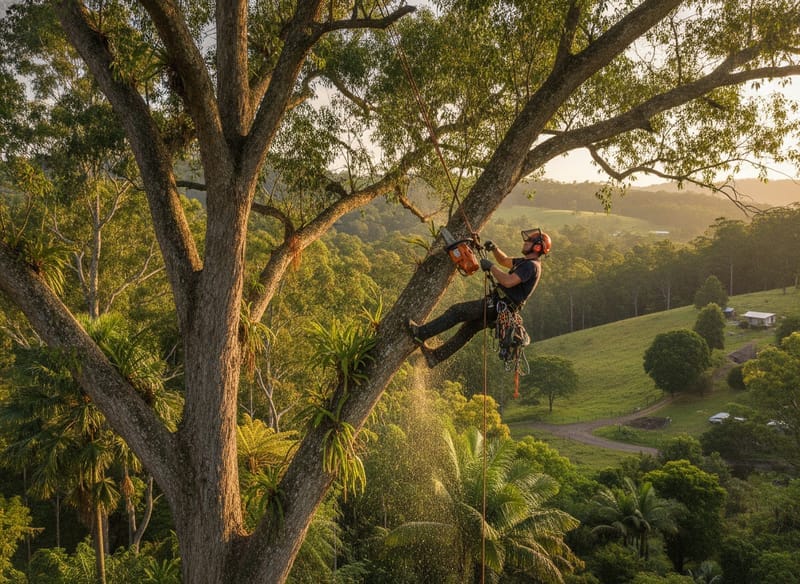
On the day of the job, our climbing arborists arrive equipped for the specific terrain. Because Point Cook properties often feature extremely narrow side access and service easements, we frequently rely on advanced rope-access climbing techniques rather than bulky elevating work platforms. Our climbers safely dismantle overhanging limbs piece by piece, carefully rigging the heavy timber down to avoid damaging underneath structures, fences, or your delicate landscaping.
Once the canopy is successfully reduced, our ground crew processes all the resulting green waste. We run the branches through our high-capacity wood chippers, turning the mess into valuable mulch, and load the larger logs into our tipper trucks. Before we drive off, we rake and sweep your property entirely clean, leaving your yard impeccably tidy and your tree perfectly shaped.
All our tree size reduction and pruning work is conducted strictly in accordance with AS4373 (Pruning of Amenity Trees). Our AQF Level 3 climbing arborists use correct branch collar cuts and target pruning techniques to protect your tree's long-term health, absolutely refusing to perform destructive topping.
Safety is non-negotiable when dealing with heavy timber over suburban homes. Our entire team is fully insured for public liability and covered by WorkCover. Whether we are operating top-handle saws aloft on ropes or navigating tracked spider lifts through tight estate boundaries, we maintain rigorous safety and traffic management protocols to protect your family, your property, and our crew.
Executing Tree Lopping Point Cook safely requires deep local knowledge. The flat basalt plains and highly reactive, sodic clay soils of the Werribee area mean tree root systems undergo extreme physical stress during our long summer dry spells. Shrinking clay constantly loosens root plates, making top-heavy, unpruned trees highly vulnerable to the sudden summer squalls that sweep across the open grassland plains.
If you live near the Cheetham Wetlands, Skeleton Creek, or Lollypop Creek, your property might fall under an Environmental Significance Overlay (ESO) in the Wyndham Planning Scheme. In these specific waterway corridors, heavily pruning or removing native vegetation like mature River Red Gums may require a council planning permit.
However, for most residential exotics, planted windbreaks, and ornamental trees on standard blocks, you can safely reduce overgrown canopies without council approval. Our team always assesses your property's overlay status first, and we can provide the required AQF Level 5 arborist reports if a formal planning application is necessary.
After a significant canopy reduction, your tree will need a little environmental support to recover. Because the Werribee Plains receive some of the lowest rainfall in southern Victoria, we highly recommend deep-watering your newly pruned tree during summer dry spells. This helps it push out healthy, structured growth rather than panicked, stress-induced shoots. Keep an eye out for any dieback or unexpected epicormic growth over the following seasons. While our proper pruning techniques last much longer than crude hacking, fast-growing species in Wyndham's residential estates will eventually require another maintenance cycle. We recommend having our arborists inspect your mature canopy trees every two to three years.
Pricing for canopy height reduction and tree management is based on tree size and site access.
We provide clear, upfront written quotes covering all labour, climbing, and cleanup costs.
We provide crown reduction and tree management across Point Cook and surrounding areas.
Contact our qualified arborists for safe height reduction and canopy solutions across Point Cook.
Get a Free Quote