Controlled Tree Size
Keep large trees at a safe, manageable scale suited to compact residential blocks in Williams Landing.
Professional height reduction, selective canopy control, and standard-compliant alternatives for overgrown trees in Williams Landing.
Providing safe canopy reduction and tree management throughout Williams Landing and neighbouring estates.
If you are searching for tree lopping Williams Landing homeowners often need solutions to reduce excessive canopy height, clear rooflines, or eliminate shade.
Fast-growing trees such as spotted gums and eucalypts planted in Williams Landing can quickly outgrow tight lot sizes. We apply directional reduction cuts that control size without destroying structural health.
Keep large trees at a safe, manageable scale suited to compact residential blocks in Williams Landing.
Standard-compliant reduction cuts result in stable, securely attached lateral limbs rather than weak hazard shoots.
Eliminate branches brushing against gutters, fascia boards, and neighbourhood utility wires.
We evaluate the tree's height, structure, and past lopping history to choose the best reduction approach.
We establish exact lateral branch targets to achieve the desired height reduction safely.
Our climbers or platform operators reduce leaders to healthy parent branches using clean cuts.
All green waste is mulched, pathways are swept clean, and the yard is left tidy.
When property owners call us for Tree Lopping Williams Landing, they usually have one simple goal in mind: making a large tree smaller, safer, and more manageable. Whether you are living in one of the newer tight-lot estates and have an ornamental pear outgrowing its space, or you manage a larger block bordering Skeleton Creek where an aging River Red Gum is extending too far over your roof, our climbers are here to help.
As Williams Landing continues to develop, residential blocks are getting tighter, and managing canopy spread is essential for preserving sunlight, clearing service lines, and preventing storm damage. We often see established eucalypts and exotic canopy trees dominating backyards, creating heavy leaf litter and threatening fences during the hot summer northerlies. Our arborist team provides professional, targeted tree reduction strategies that bring your canopy back to a manageable size while ensuring the tree remains structurally sound and visually appealing.
The term "lopping" is often used to describe cutting a tree down to size, but the traditional method of flat-out topping a tree is one of the most destructive things you can do to your canopy. When under-qualified operators indiscriminately hack branches halfway down, it leaves massive, ugly stubs. These stubs struggle to heal, inviting rapid decay and pest ingress. Even worse, the tree responds by panic-pushing weak, epicormic regrowth that is highly prone to snapping off in the next strong winter westerly or summer storm gust front. Our approach is different. As qualified arborists, we understand that you need the tree brought down in size, but we achieve it using AS4373-compliant pruning techniques. Instead of leaving blunt stubs, our climbers perform precise target pruning and crown reduction. We cut back to established lateral branches, which allows the tree to heal correctly and redirects its growth naturally. This method solves your clearance and overgrowth problems without creating a dangerous hazard down the line. We reduce the weight on extended limbs, clear your roofline, and improve the safety of your property. You get the size reduction you asked for, and the tree maintains its long-term health, saving you from having to pay for an emergency tree removal a few years later.
When you need your tree size reduced, our qualified arborist team uses specialized, AS4373-compliant techniques to achieve the best result for your Williams Landing property.
The safest way to reduce the overall height and spread of a tree. Our climbers selectively shorten branches back to suitable growth points, bringing the canopy size down while maintaining a natural shape and structural integrity.
Ideal for clearing pathways, driveways, or fences. We carefully remove the lowest branches of the tree, increasing vertical clearance without impacting the upper canopy or the tree's health.
A technique used to reduce the density of the foliage. We selectively remove secondary branches within the canopy, allowing more light to penetrate and significantly reducing wind resistance during summer gust fronts.
When specific limbs are encroaching on buildings or service lines, we use precise branch collar cuts. This prevents the decay typically caused by blind lopping and ensures the tree seals the wound efficiently.
Following storm damage or sudden limb drop, we perform rapid weight reduction on compromised branches, stabilizing the tree before further failures occur.
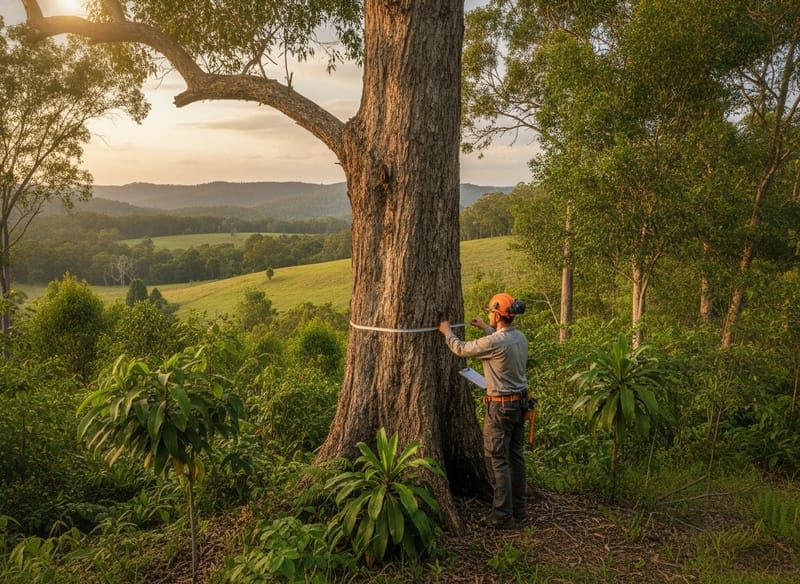
1. Initial Site Assessment and Consultation We visit your property to assess the tree in question. We listen to your goals—whether you need more sunlight, roof clearance, or risk reduction—and determine the best AS4373-compliant pruning strategy to achieve that without resorting to harmful topping.
2. Fixed, Transparent Quoting Our team provides a detailed, written quote outlining exactly what branches will be reduced and how much canopy will be removed. We typically remove no more than 25-30% of the live crown at one time to preserve the tree's health.
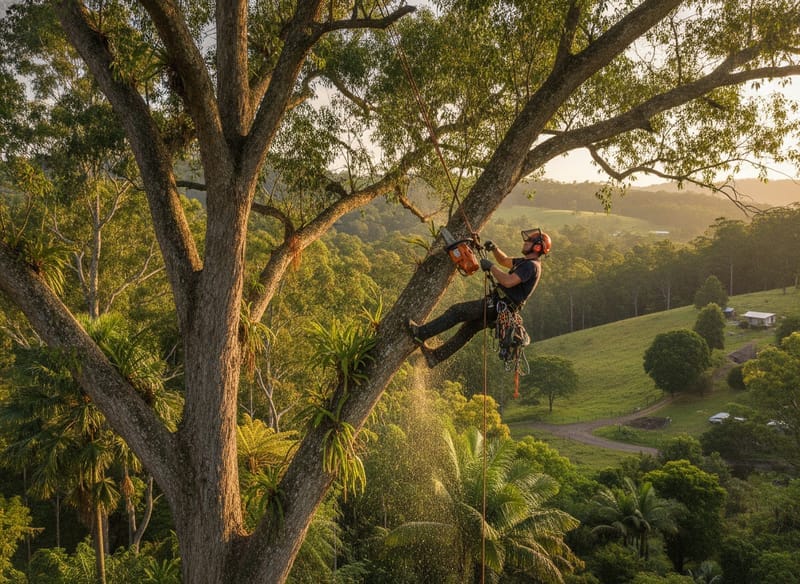
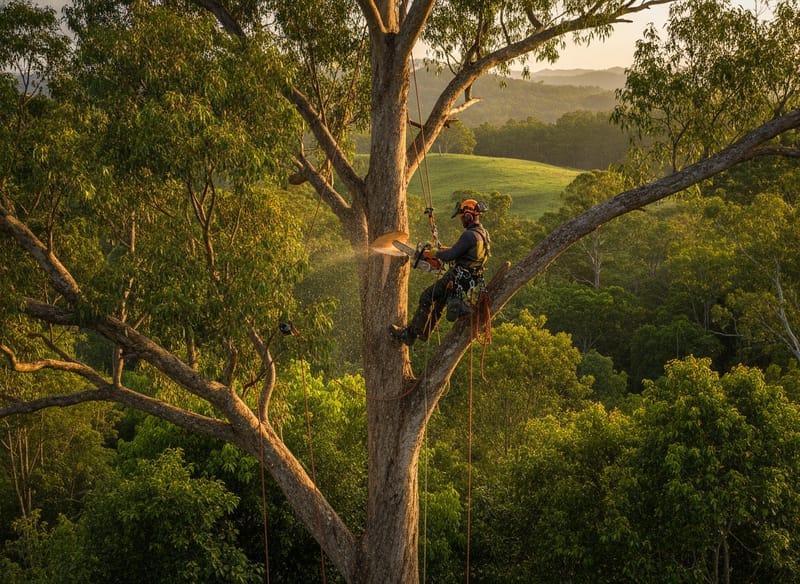
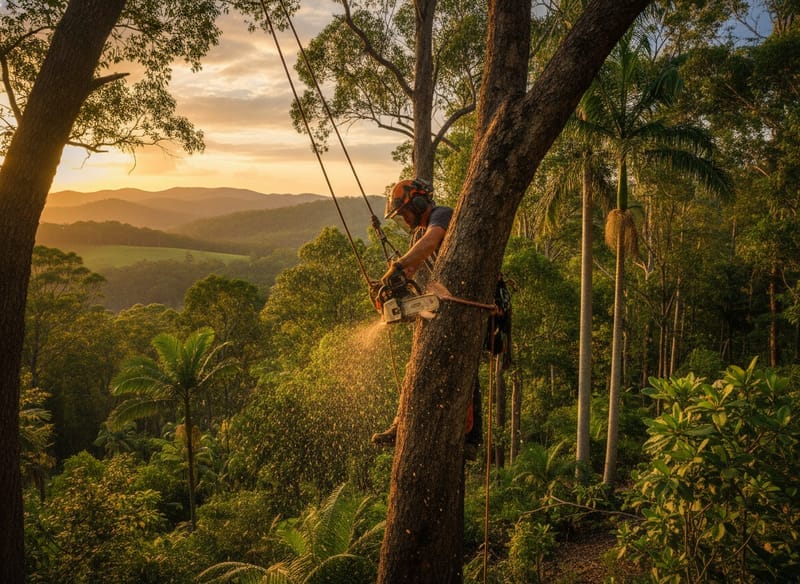
3. Safe Canopy Access and Reduction Depending on your property's access, we utilize elevated work platforms (EWPs) or rope-access climbing techniques. Our climbers systematically reduce the canopy length using top-handle chainsaws and pole pruners, lowering heavy limbs safely via rigging ropes to avoid damaging your landscaping, fencing, or property.
4. Processing and Cleanup As the limbs come down, our ground crew processes the timber. We run the brush through our high-capacity wood chippers, turning the offcuts into valuable mulch. We can leave this mulch for your garden or cart it away in our tipper trucks.
5. Final Inspection We rake and clean the site thoroughly, ensuring your yard is left immaculate. We will then walk you through the completed job to ensure the size reduction meets your exact expectations.
Every canopy reduction job we undertake is guided by AS4373 (Pruning of Amenity Trees), ensuring that your tree's structural integrity is never compromised by poor cutting practices. Our on-ground and climbing teams hold AQF Level 3 in Arboriculture, giving you peace of mind that highly trained professionals are handling your heavy timber. For development sites in Williams Landing that require tree protection plans, our consulting arborists can provide AQF Level 5 reports compliant with AS4970. Furthermore, our business is fully public liability and WorkCover insured, protecting your property, our crew, and the public while we operate elevating work platforms and rigging gear on site.
Delivering the kind of reliable Tree Lopping Williams Landing properties need is heavily influenced by the flat, dry climate of the Werribee Plains. Our local area sits in a rain shadow with heavy, reactive clay soils that shrink during droughts, stressing mature River Red Gums and planted spotted gums. When hot summer northerlies hit, heavy, over-extended canopies are highly susceptible to failure, making proactive canopy reduction critical.
While the Wyndham Planning Scheme doesn't have a blanket local law protecting all private trees, property owners must still be cautious. If your property borders a waterway like Skeleton Creek, an Environmental Significance Overlay (ESO) may require a planning permit before you lop or alter any vegetation. Additionally, properties in newer estates might be subject to Section 173 agreements protecting specific canopy trees. Our team is highly experienced with Wyndham City Council regulations; we can identify if your proposed tree reduction triggers any permit requirements under Clause 52.17 Native Vegetation.
Once our team has completed the size reduction, your tree will need a little time to adjust. During the dry Williams Landing summer, we recommend deep watering around the structural root zone to help the tree recover from the loss of foliage, especially in our heavy clay soils. Avoid applying high-nitrogen fertilizers, as this can encourage the weak epicormic growth we specifically pruned to prevent. Keep an eye on the canopy over the next few seasons. A well-executed crown reduction should last several years before needing attention. If you notice any sudden dieback or new deadwood appearing in the upper canopy, call us back for a follow-up assessment.
Canopy reduction pricing in Williams Landing is calculated based on tree dimensions, access, and how much material must be lowered and chipped.
We offer clear, upfront quotes detailing every aspect of the canopy reduction.
We manage tree height reductions and canopy management across Williams Landing and surrounding western suburbs.
Speak to our qualified team to arrange safe, standard-compliant canopy reductions for your trees.
Get a Free Quote